
Insights
What Type of Sorting Robot Should a Warehouse Choose? 5 Mainstream Methods Explained
Cross-belt, slide, wheel diverter, AMR goods-to-person, 3D sortation wall — how to choose by parcel type, throughput, destinations and budget?
The Short Answer
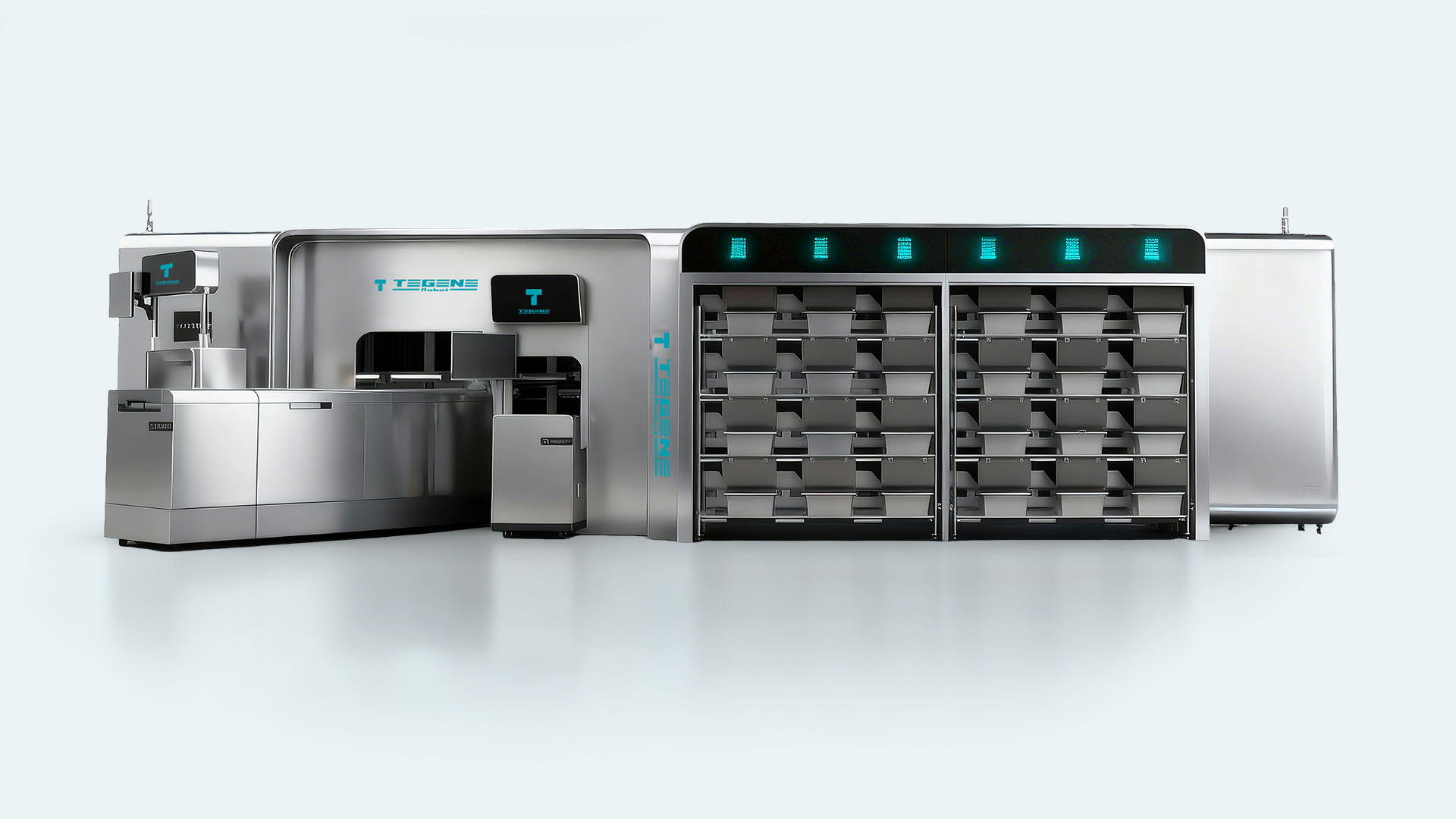
For small-to-medium parcels, many destinations, fast deployment and cost efficiency, a 3D (swing-arm/tilt) sortation wall is usually the most balanced choice; cross-belt is reserved for very high-volume trunk hubs. Tegene publishes only the maximum mechanical throughput of each 3D Sorter Series model, all with 99.99% accuracy.
Comparing 5 Mainstream Methods
By working principle, parcel fit, throughput and investment, the mainstream methods fall into five types:
- Cross-belt: very high throughput, high investment and footprint; fits large express trunk hubs.
- Slide/tilt-tray: mature, suited to regular boxes; limited flexibility and chute density.
- Wheel diverter: used for merge/divert on conveyors; limited accuracy and chute count.
- AMR goods-to-person: flexible for picking, but sortation throughput and unit cost are less competitive.
- 3D (swing-arm) sortation wall: fast deployment, high chute density, flexible and cost-effective for small-to-medium multi-destination parcels.
Decide Across 4 Dimensions
Do not judge by a single spec. Evaluate these four, then match equipment:
- Parcel type: small/medium, non-conveyable or envelope — decides equipment type (e.g. NC all-in-one for non-conveyables).
- Throughput: average and peak volume — helps decide between 3D Sorter and 3D Sorter M.
- Destinations: number of chutes/destinations — decides chute config and expansion module.
- Budget and payback: model ROI with your labor structure, not just unit price.
How Tegene 3D Sorter Series Fits
Standard small/medium multi-destination parcels: 3D Sorter. High peaks and 10k+ throughput with auto induction: 3D Sorter M. Non-conveyable/envelope mix: 3D Sorter E. Continuous chute growth: 3D Sorter X. In real projects, the US Fontana case improved labor efficiency 2-3x and a cross-border e-commerce case reached payback within 2 years.
FAQ
Frequently asked questions related to this article:
- Which sortation method suits a small or medium warehouse? Warehouses with small-to-medium volume, many destinations and limited budget/space usually fit a 3D sortation wall (e.g. Tegene 3D Sorter): fast to deploy, flexible, with chutes customizable by destination and a lower investment threshold than cross-belt.
- What is the main difference between cross-belt and 3D sortation? Cross-belt offers very high throughput but high investment and footprint, fitting large trunk hubs; 3D sortation deploys fast, is cost-effective and flexible, fitting small-to-medium multi-destination parcels and quick go-live.
- Do non-conveyable and envelope items need dedicated equipment? Yes. Non-conveyable, envelope and flat items are best handled by an all-in-one unit such as the Tegene 3D Sorter E, with up to 31,000 pcs/h mechanical throughput and 1,500 customizable chutes.
Next Step
Turn this scenario into a deployable plan
Tell us your site size, parcel mix, peak volume and target market — we’ll respond with a specific configuration and deployment plan.
Contact Us